

Get Part 2 of your FREE picture book illustration assignment!
There’s less than a week to go until the start of our raved-about picture book illustration course, Illustrating Children’s Books.
Tons of our students have gotten book illustration deals after taking this course – read some of their stories here. In five intense weeks, you’ll create a ready-to-send professional pitch presentation that contains everything an art director or publisher needs to see to give you work.
If you’re ready to build or boost your picture book illustration career, don’t wait – sign up now.

In order to give you a little taste of the course, and to help you get warmed up and ready for class, art agent and course leader Lilla has written a FREE three-part #MATSprep assignment for you. We’re drawing a scene together.
Scenes are a huge part of picture book illustration, which is why you’ll spend a full week of Illustrating Children’s Books learning about them and creating a gorgeous full-page spread for your pitch. Your teachers, illustrator and former top art agent Lilla and children’s book art director and picture book author Zoë, will share loads of tips and insight that will help you create an incredible eye-catching spread.
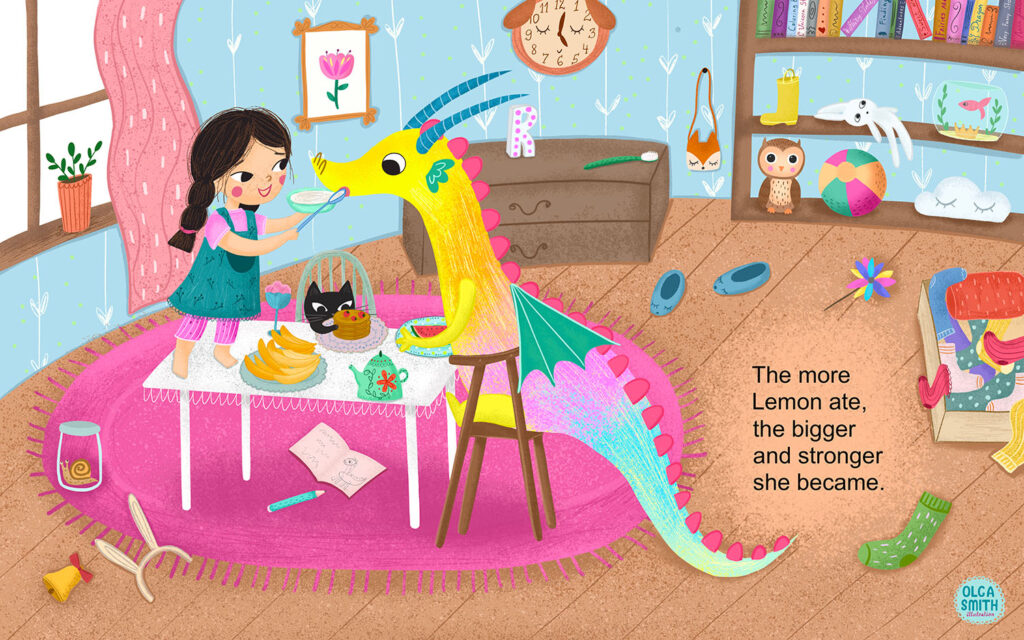
Art for class by Make Art That Sells student Olga Smith. Your pitch will contain everything an art director or publisher needs to see, including a gorgeous full-page spread like this.
Zoë says: “As an art director, I like to see examples of scenes and environment in your portfolio because it tells me how you handle color, detail and secondary storylines.”
What are secondary storylines? A secondary storyline is a separate narrative strand that runs parallel to the main plot. In a picture book, for example, it might be a small character hopping alongside the main action, having their own unspoken adventure. It can be a great opportunity to bring something personal and unique to your story that is not in the text.
Look at the two children on the bottom left of this gorgeous art for Illustrating Children’s Books by Make Art That Sells student Ilana Diamond, for example. The little girl is sticking her finger in the icing of the wedding cake and looking crossly at her little brother, who is trying to get the attention of their adult. This is a great example of a secondary storyline. You’ll get more tips like this in class, to help you create a really powerful picture book illustration pitch.
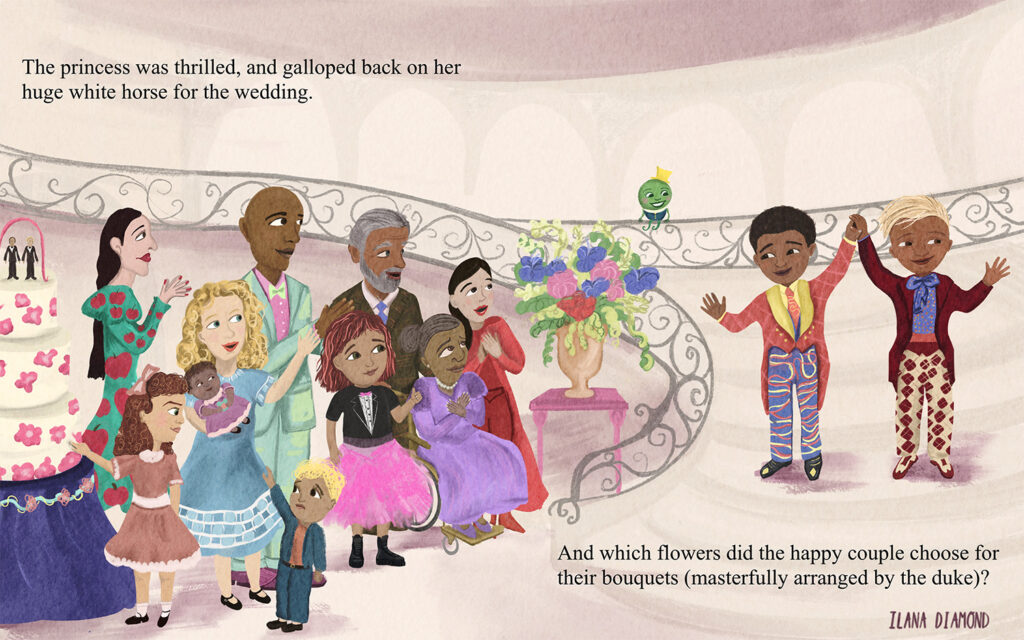
Art for class by Make Art That Sells student Ilana Diamond. Create an eye-catching picture book pitch in just five weeks – sign up for Illustrating Children’s Books now.
Here’s Part 2 of your FREE #MATSprep!
In Part 1, you drew some trees – if you missed it then catch up here.
Today you’re going to add a few birds and some mountains off in the distance.
Just like before, you can use whatever media, style and colors you like – one of the cool things about picture book illustration is that there’s room for all styles, from minimalist to lush, cartoon to realistic.
Adding mountains to your image is going to start adding some depth to your scene.
What is depth and why is it important? Depth is how we start to turn a flat 2D image – your artwork – into an engaging 3D scene that children will love to look at. Using the foreground, middle ground and background will make your artwork more immersive and more interesting.
Again, you’ll get tons of tips on this and more in class, but today we’re going to share a cool tip from art agent Lilla that will immediately create more depth in your art. (In Part 3 we’ll be sharing two more tips from Lilla, so keep your eyes peeled!)
Tip #1: Atmospheric perspective
Things in the distance are affected by what’s called atmospheric perspective. That means that things far away are more muted (slightly grayed-out). This is because there are particles in the air (and maybe even fog), plus human vision is less acute for distance, so it’s going to be softer. So if you draw items in the background less crisply, with less vivid color, it will instantly make them appear further away.
Take a look at this spread for Illustrating Children’s Books by Make Art That Sells student Sirjana Kaur. See how the leaves, flowers and trunk of the tree in the foreground are larger and much more detailed than the trees in the background. The houses at top right are muted and grayed-out, and so is the woman walking her dog on the right of the image. All these things help create depth and interest.
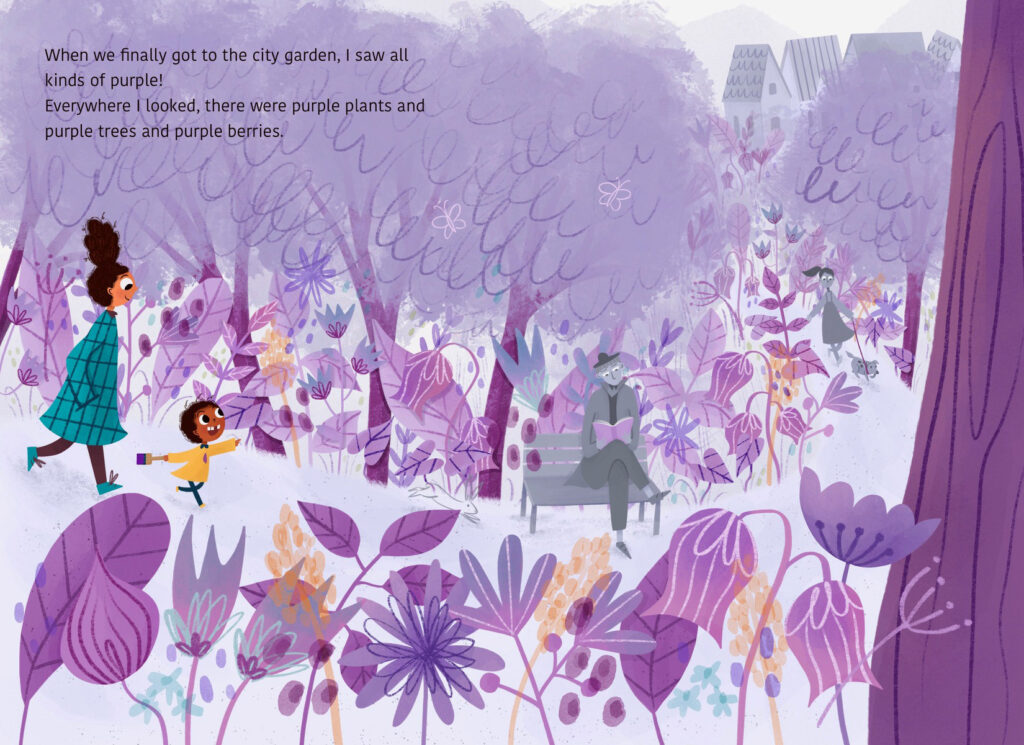
Art for class by Make Art That Sells student Sirjana Kaur. Illustrating Children’s Books starts NEXT MONDAY, April 27th – don’t miss out, book your spot here.
Don’t forget we’ll be sharing even more tips from agent Lilla in Part 3 on Friday – and even more in class!
Once you’re done, share your work on social media and be sure to tag @makeartthatsells and use the hashtag #MATSICB13 so we can see them.
Don’t forget, Illustrating Children’s Books 2026 starts NEXT MONDAY, April 27th! Sign up now to get a ton of awesomeness every day for five weeks to help you grow your art!


- Monday, April 27th: Create a ready-to-send picture book illustration pitch in just five weeks in Illustrating Children’s Books! Find out more and sign up here.
- Monday, April 27th: FREE live Zoom with art agent Lilla and children’s book art director Zoë at 12 noon ET/5 pm BST! Get your questions about picture book illustration answered by two industry experts!
- Next newsletter: Get Part 3 of your FREE #MATSprep warm-up assignment for Illustrating Children’s Books.
Lots of love
The Make Art That Sells team xxx